









The importance of jewelry care is easy to dismiss until you look closely at a piece you have worn every day for three years. Jewelry does not usually fail dramatically. It thins at the clasp, dulls at the contact points, loses a prong, and one ordinary afternoon a pendant is gone. This guide is about why maintenance matters rather than the step by step routine: what wears out first and why, what neglect actually costs, how to protect a piece that carries sentimental weight, and how to make sure a gift outlives the occasion it was given for.
Why the importance of jewelry care is easy to underestimate
Most jewelry is lost rather than broken, and most losses are preventable. A clasp that has been catching for a month, a prong that has worn thin, a chain link opened slightly by a snag: each of these announces itself well before it fails, and each is a small repair until the day it is not.
The second reason is appearance, which matters more than people admit. A piece that has gone dull stops being worn, and a piece that stops being worn might as well not exist. Nobody decides to retire a necklace; it simply stays in the box because it no longer looks like it did.
The third reason is value, and it is the one most relevant to message card jewelry: the value here is not resale. It is that this object was given by a specific person, on a specific day, with words attached. That is not replaceable at any price, and it is exactly the category of object people most often neglect, because nobody thinks of a gift from their mother as something requiring maintenance.
Care, in this context, is not about polish. It is about making sure that in twenty years the piece and the card are still together, still legible and still wearable.
What wears out first, and why
Wear is not spread evenly. It concentrates in a few predictable places, and knowing them tells you where to look.
The clasp goes first on almost every necklace. It is the part that is handled twice a day, it has moving components, and the spring inside a lobster clasp weakens with use. A clasp that needs two attempts to close is already failing.
Next is the bail, the loop the pendant hangs from, and the links either side of it. That is the point of maximum movement and maximum load. On a chain worn daily, it is where thinning shows first, and it is best checked by feel rather than by eye.
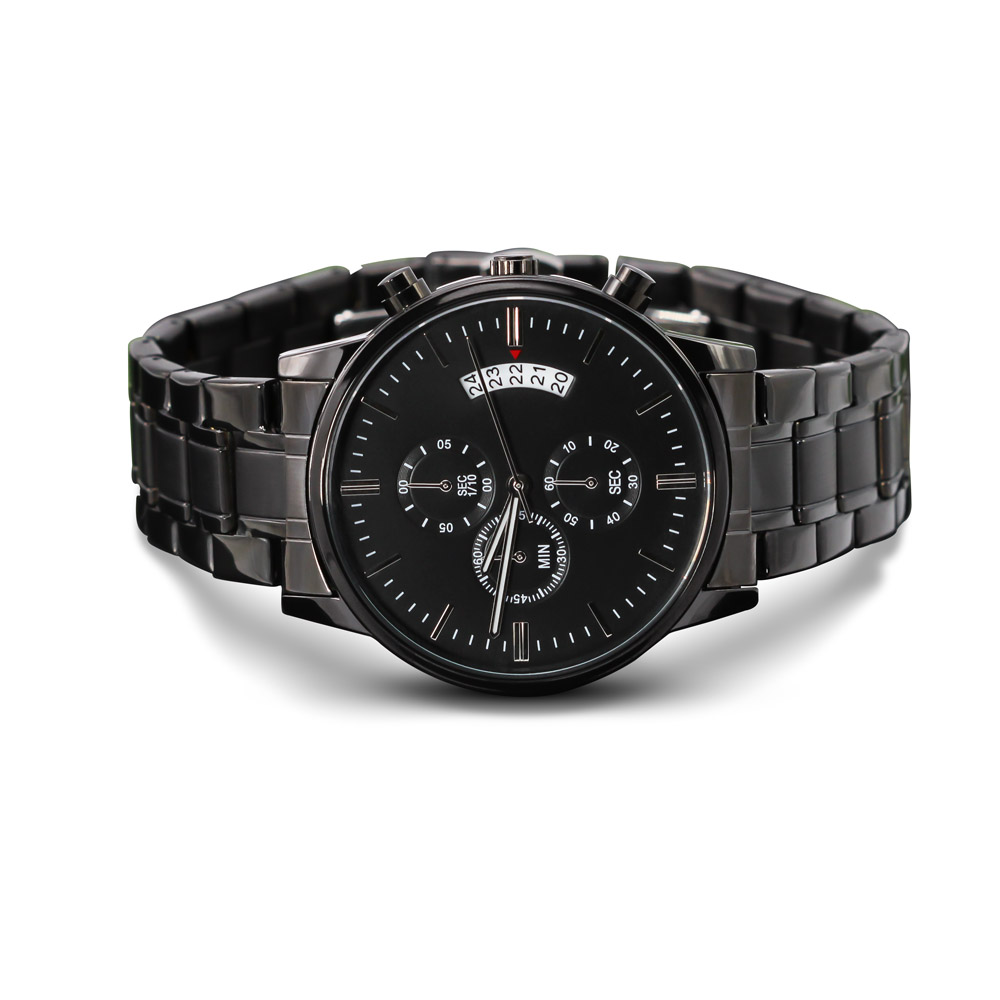
On plated pieces, the finish wears where the metal touches skin and clothing most: the back of a pendant, the underside of a chain, the edge of a watch case. This is why two identical pieces can age completely differently depending on who wore them and how.
Stones loosen rather than fall. A stone that rattles or moves under fingernail pressure has been loosening for weeks. The same is true of a watch pin and a bracelet link.
None of this requires expert inspection. Five minutes twice a year, with the piece under a good light, catches nearly all of it. Our practical routine for the rest of the collection is in the jewelry care tips guide.
Light, heat and chemicals: the three quiet destroyers
Sunlight is underestimated. Prolonged UV exposure fades printed cards, dulls some stones and degrades the adhesives used in certain settings. A jewelry box on a sunny windowsill is one of the worst places in a house to keep anything.
Heat is the second. Sudden temperature changes crack stones that contain water or inclusions, including opal, emerald and peridot, and sustained heat can shift the color of treated stones such as citrine and some topaz. A car glove compartment in summer is an unexpectedly hostile environment.
Chemicals do the most damage overall, and the culprits are domestic rather than industrial. Chlorine, bleach, ammonia, and the cleaning products used for kitchens and bathrooms all attack metals and finishes. So do cosmetics, in slower motion: perfume, hairspray and lotion leave residue that dulls surfaces and creeps into settings.
The pattern in all three is exposure over time rather than a single event. That is what makes them easy to ignore and easy to prevent. Take jewelry off before cleaning the house, keep it out of the sun and the car, and put it on after cosmetics.
Protecting a piece that carries meaning
For sentimental jewelry, there are two objects to protect: the piece and the story attached to it. Most people only think about the first.
Keep the printed message card with the piece, flat and dry. A card stored separately becomes paperwork, and paperwork gets thrown out during a move. Consider photographing the card, particularly if anything was handwritten on it, since ink fades faster than print.
Write down who gave it and when, even if it feels unnecessary now. A necklace with a note saying "from Mum, my thirtieth" is an heirloom. The same necklace without the note is a nice pendant that somebody in the family vaguely remembers the origin of.
Pieces given for a reason are usually worn hard, which is a good problem. The Stay Strong infinity necklace and The Older I Grow birthstone necklace are the kind of gifts people put on and do not take off for months, so they collect more wear than anything in the box. For pieces like that, the twice yearly check matters most.
If a piece is worn daily and cannot be replaced, consider owning two: one for every day and one kept for occasions. That sounds indulgent until you have lost something that was not replaceable.
The other half of protection is equipment, and there is very little of it. A soft polishing cloth kept in the same box as the jewelry does more for a finish over ten years than any occasional professional clean, because it removes the residue before it has time to work on the metal.
When a jeweler is worth the trip
Home care handles cleaning and prevention. Four situations need someone with a bench.
Worn prongs and thin claws, which hold stones in place and fail without warning. A jeweler can retip them in minutes and usually charges very little.
A clasp that no longer closes cleanly. Replacing a clasp is a small job and one of the highest value repairs in jewelry, because it prevents the loss of everything attached to it.
Restringing anything knotted or strung, every few years for pieces worn often, and immediately if thread is visible between beads.
Replating, when a finish has worn through at the contact points. It cannot be polished back, and whether it is worth doing is a question about sentiment rather than economics. For a gift with a card attached, it usually is.
If you are buying a piece meant to be worn daily for years, factor this in when you choose. A watch from the watch range or a pendant from the wider necklace collection will both need attention eventually, and the ones that get it are the ones still being worn in a decade.
Building a habit that actually sticks
Maintenance routines fail because they are scheduled. Nobody keeps a calendar reminder to inspect a necklace.
Attach the habit to something that already happens instead. Wipe the piece as you take it off, which takes seconds and needs no decision. Check clasps and settings when the clocks change, twice a year, because that is a date you cannot forget and it splits the year neatly.
Keep the cloth and the box in the same place, so the correct action is also the easiest one. Most care failures are friction problems rather than knowledge problems: people know jewelry should not live on the bathroom counter, and it lives there because that is where they take it off.
Do that much and the rest looks after itself. A piece that is wiped, stored properly and checked twice a year will outlast almost any use it gets, and the card will still be readable when the person who wrote it is not around to be asked about it.
Shop the pieces in this guide

To My Gorgeous Wife: Last Breath, Infinity Necklace
To My Wife: Your Last Everything (Clean Design), Infinity Necklace
To My Wife: Missing Piece, Infinity Necklace
To My Daughter: Always Here For You, Infinity Necklace
To My Daughter: How Special You Are, Infinity Necklace
To My Daughter: You Will Always Have Me, Infinity Necklace
Questions buyers ask
How often should jewelry be cleaned?
Wipe a piece with a soft cloth each time you take it off, and give anything worn daily a gentle wash with warm soapy water every few weeks. Frequent light cleaning does more good than an occasional deep clean.
Is a plated finish permanent?
No. Plating is a thin layer that wears at the points of most contact, usually the back of a pendant or the underside of a chain. It can be replated by a jeweler, but it cannot be polished back once it is worn through.
When should I take a piece to a jeweler?
If a stone moves under gentle pressure, a clasp needs two attempts to close, a prong looks thin, or thread is visible in a strung piece. All four are inexpensive repairs until something is lost.
How do I protect the message card that came with a gift?
Keep it flat, dry and out of sunlight, in the same box as the piece, and photograph it if anything was handwritten. Note who gave it and when, because that record is what turns a pendant into an heirloom.


