














The power of positivity is usually described as something you do alone, in your own head, first thing in the morning. In practice most of it happens between people. The friend who assumes the best of you, the colleague who does not catastrophize, the parent who was calm when something broke: their outlook shapes yours more than any affirmation does. This guide covers what positivity changes and what it does not, how to notice your own default setting, four things worth trying, and how to be the steady one for somebody else without pretending everything is fine.
What positivity changes, and what it does not
Start with the honest limits. A positive outlook does not pay a bill, cure an illness or fix a relationship that both people have stopped working on. Claims that it does are why so many people are suspicious of the whole subject, and the suspicion is earned.
What an outlook does change is interpretation, and interpretation drives behavior. Two people get the same curt email. One reads it as a warning sign and spends the afternoon rehearsing a defense; the other reads it as someone being busy and replies in a line. Nothing about the email differed. The day that followed did.
Over years, those small differences compound, mostly through other people. Someone who assumes goodwill asks for help sooner, apologizes faster and holds fewer grudges, and gets treated accordingly. That is not magic; it is just the practical result of a default setting.
So the useful question is not whether positivity is powerful in the abstract. It is whether your current default is accurate, and whether it is serving you.
There is a second limit worth naming, because it catches people out. An outlook is not a fixed trait you either have or lack. It moves with sleep, workload, daylight, money worries and the company you keep, which means a stretch of pessimism is usually a signal about conditions rather than a statement about character. Treating it as a character flaw adds guilt to a bad month and makes the month longer. Treating it as information tends to point at something practical that can actually be changed: an earlier bedtime, a lighter week, one fewer commitment, or a conversation that has been put off since spring.
Finding out what your default actually is
Most people cannot describe their own outlook accurately, because the commentary in a mind is invisible to the person running it. Two checks help.
The first is the reply test. Notice the gap between something happening and your first internal sentence about it. That sentence is your default, and it is usually more extreme than anything you would say out loud. Writing it down for a few days makes the pattern obvious in a way that trying to remember does not.
The second is the retelling test. When you describe your week to someone, notice what you lead with. Most of us lead with the complaint, not because the week was bad but because complaint is a more socially useful story. That is a habit rather than a report, and habits can be changed.
Neither check is about self criticism. If you find a harsh default, that is information, and it is extremely common. The point is to see it clearly enough to interrupt it.
There is a third check that only other people can run for you, which is to ask someone who has known you a long time how you tend to react when something goes wrong. The answer is often uncomfortable and almost always more accurate than your own account, because they have watched the pattern from the outside for years while you were busy living inside it. Ask someone who likes you enough to be honest, and take the answer as data rather than as a verdict.
Four practices worth the effort
Shrink the input
Nothing sets a negative default faster than an unlimited feed of alarming information. Cutting news and social media to a fixed time of day, rather than whenever the phone is in your hand, changes the background hum of a week more than any single habit.
Say the fair version
When the first internal sentence is sweeping, replace it with the accurate one. Not the cheerful one, the accurate one. This is the same practice covered in our guide to the power of positive thinking, and it is the single most transferable technique in this area.
Bank the good bits deliberately
Good moments pass without registering unless you stop for a second and notice them at the time. A deliberate pause of a few seconds, while something pleasant is happening, is what turns an event into a memory you can find later.
Keep one visible reminder
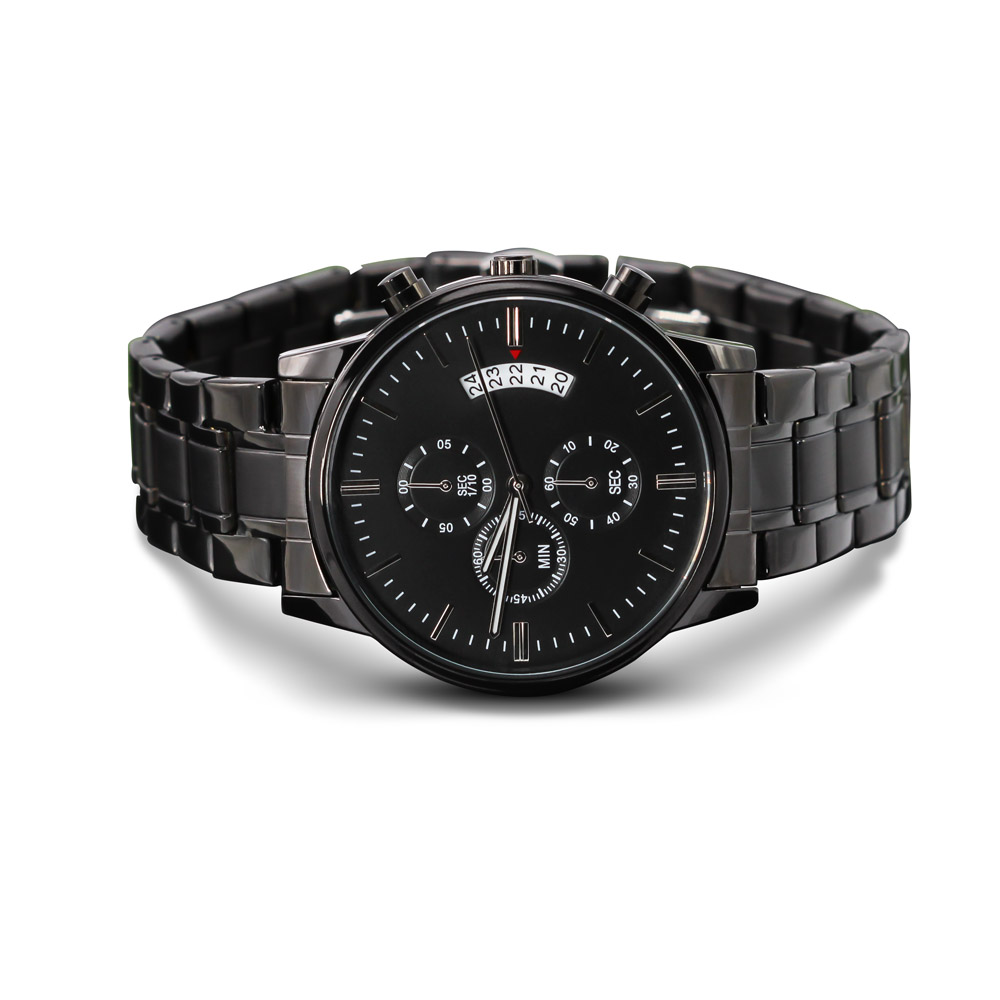
Something you see or wear every day works better than a note in an app, because it does not require you to open anything. A piece with words on it does this quietly, and our Eternal Hope collection is built around exactly that idea.
Being the positive one for someone else
Most people reading this are not trying to fix their own outlook. They are worried about someone else: a daughter who has lost confidence, a partner in a bad stretch at work, a friend who has gone quiet.
The first rule is not to argue with how they feel. Contradiction, even gentle contradiction, reads as being told they are wrong about their own life. Agreement plus presence works better: "that sounds exhausting, and I am not going anywhere."
The second is to be specific about what you will do. Vague offers of help put the work of asking onto the person least able to do it. Naming a day and a task is worth more than any encouragement.
Where a gift helps, it helps as a marker rather than a fix. For a daughter, the Braver Stronger Smarter love knot necklace says what a parent usually says too late and too rarely, and the Your Happiness Eternal Hope necklace is written for a parent who has realized that their child's happiness matters more than their achievements. The wider range of gifts for a daughter covers different ages and tones.
For someone rebuilding a sense of who they are outside a job or a relationship, the Change The World By Being Yourself watch puts the message somewhere they will see it several times a day.
If the person you are worried about is not simply having a hard month, say so plainly and encourage them to talk to a doctor. Persistent low mood is a health matter, and support from friends and family sits alongside professional help rather than replacing it.
Keeping it going when the year is long
Outlook is not a state you arrive at. It drifts with sleep, workload, daylight and everything else, and the drift is not failure.
Build the practices into things that already happen rather than into a schedule. Attach the fair version habit to the commute. Attach the input limit to a charging cable left in another room. Habits that depend on remembering tend to end quietly in February.
Watch for the version of positivity that becomes a performance for other people, especially in families where one person has been designated the cheerful one. That role is heavy, and the person carrying it is often the last to be asked how they are.
The practical, physical side matters too, and it is easy to neglect when you are focused on attitude. Our list of self care ideas covers the small habits that make the mental ones sustainable.
Shop the pieces in this guide

Happy Valentine's Day: What I Found In You, Eternal Hope Necklace
To My Favorite Person: Before I Met You, Eternal Hope Necklace
Love Letter: Valentine's Day Gift, Eternal Hope Necklace
Happy Valentine's Day: Whole Damn Sky, Eternal Hope Necklace
To My Swolemate: My Meal Plan, Eternal Hope Necklace
To My Daughter: Always My Baby, Eternal Hope Necklace
Questions buyers ask
Is a positive outlook something you are born with?
Partly, but the default can be shifted with practice. The measurable change is usually in how quickly you catch a sweeping negative thought and replace it with an accurate one, rather than in never having the thought at all.
How do I stay positive without ignoring real problems?
Aim for accuracy rather than cheerfulness. If a situation is genuinely bad, the accurate thought is that it is bad and needs to change, and reframing should never become a way of tolerating something that needs action.
How can I help someone who has lost their confidence?
Listen without contradicting how they feel, name one specific thing you will do to help, and keep showing up. If the low mood is persistent or affecting daily life, encourage them to speak to a doctor or therapist.
Do encouraging gifts actually help?
A gift is a marker, not a fix. What makes one land is specificity: a card naming what the person actually got through says more than a general message, and it gives them something to reread on a hard day.


